
My columns opposing the mining for titanium dioxide on Trail Ridge near our Okefenokee National Wildlife Refuge have drawn a heavy reader response. Almost all of it supporting a permanent ban on mining in the area.
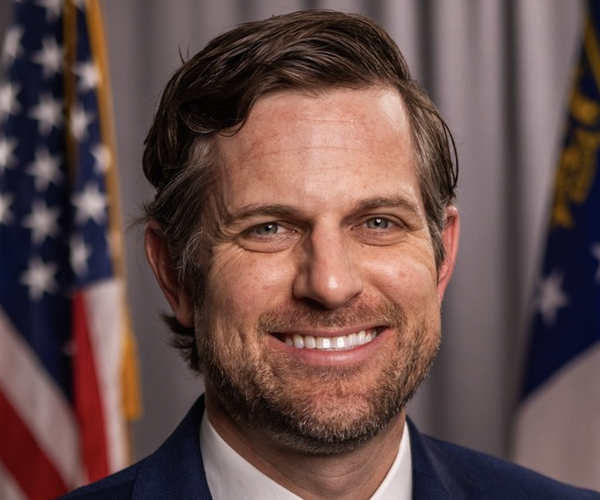
I also have received a rebuttal, asserting I have gotten my facts wrong. This from Drew Jones, a Charlton County commissioner. It is in Charlton County wherein Trail Ridge is located. Jones is also the nephew-in-law of Joe Hopkins, president of Toledo Manufacturing, one of the leading opponents of a ban. Hopkins is Toledo’s president. Drew Jones runs the company day to day.
Toledo Manufacturing owns 50,000 acres in Charlton County, making them one of the largest landowners in the county. Although he takes issue with the accusation, Joe Hopkins is seen by supporters of a ban on mining as having outsized political influence in the state and being the primary reason legislation to ban such mining on Trail Ridge has gone nowhere under the Gold Dome, despite bipartisan efforts to pass such a measure through several legislative sessions.
Mr. Jones asked to give Toledo Manufacturing’s side of the story. I told him I would share his letter with you minus any snarky asides from me. You can make of his comments what you will. Here is the letter:
“Dear Mr. Dick Yarbrough: Your recent column concerning mining near the Okefenokee National Wildlife Refuge contains several assertions and implications regarding Toledo Manufacturing Company that require correction.
“To be clear at the outset, Toledo Manufacturing never advocated for Twin Pines Minerals to receive a permit, nor did we support mining absent rigorous, independent scientific review. We have consistently advocated for objective, science-based decision-making carried out by qualified regulatory agencies, free from political pressure, whether that pressure seeks to force approval or impose a blanket prohibition without evidence. That distinction matters, and your column does not reflect it.
“Property ownership adjacent to a proposed project does not equate to support for that project. Our position has been that decisions of this magnitude should be based on transparent studies conducted by credentialed experts without ideological or financial bias, not on reflexive opposition, campaign rhetoric or pressure from interest groups on either side of the issue.
“You suggest that elected officials who advocate for regulatory review rather than legislative bans are acting in bad faith. We respectfully disagree. Complex hydrological and environmental questions should be resolved through empirical analysis and scientific review, not political litmus tests. Decisions made otherwise risk undermining public confidence and setting concerning precedents.
“Your column also references Toledo Manufacturing as having ‘solicited’ Chemours to mine the area. This characterization is misleading. Any mention of Chemours has been purely hypothetical, in the context of public discussion about potential future land use, and not the pursuit of any project, partnership or mining proposal. Exploring theoretical possibilities is not the same as advocating for or advancing a mining operation.
“It is also important to recognize the broader context. Across our nation, forestland ownership is becoming increasingly unprofitable. Many owners earn less from timber today than they did 30 years ago, even without adjusting for inflation, while the costs of ownership have risen significantly. Private landowners continue to provide immense environmental benefits such as clean air, wildlife habitat, biodiversity and carbon sequestration while bearing the associated costs. We rarely see articles addressing this pressing issue, yet well-funded conservation groups and the media could make it a top priority. What you have written about for years is a symptom of the problem, not the problem itself. The general public may be ignoring the economic realities of owning forestland. Without economic viability, these lands will eventually be converted to other uses, not out of greed, but out of necessity.
“Readers deserve accurate reporting based on facts, not narratives constructed without input from those most directly involved. We encourage coverage that reflects evidence, transparency, and the evolving nature of scientific research. If current or future studies demonstrate that mining in or near the Okefenokee poses unacceptable risks, then permits should not be issued. That conclusion should rest on evidence, not presumption.
“Toledo Manufacturing remains committed to environmental stewardship, property rights, and the rule of law. Those principles are not mutually exclusive and presenting them as such does a disservice to an issue that deserves serious, thoughtful consideration. We hope this clarification reaches readers as broadly as your other columns.”
Drew Jones
Toledo Manufacturing Company, Inc.
Folkston, Georgia
You can reach Dick Yarbrough at dick@dickyarbrough.com or at P.O. Box 725373, Atlanta, Georgia 31139.