NEWTON COUNTY – At Tuesday’s Newton County Board of Commissioners meeting, the board heard an update on water levels and whether any per-and polyfluoroalkyl substances (PFAS) chemicals were detected in the water throughout 2024.
This update comes after months of deliberation between District 4 Commissioner J.C. Henderson and County Manager Harold Cooper about whether PFAS chemicals were prevalent in Newton County’s water sources. Henderson had expressed his concern about the possibility of PFAS in Newton County water over the course of several meetings.
Based on the report provided by Cooper, no PFAS chemicals were detected in 2024.
According to the Environmental Protection Agency (EPA), PFAS are widespread, long-lasting chemicals, sometimes called “forever chemicals” that break down very slowly over time. They can be mostly found in water, air, fish and soils, but can also be found in the blood of people and animals. Some studies have found that exposure to PFAS chemicals could have harmful effects on people and animals.
The EPA is still working to determine the best way to detect, measure and remove PFAS in order to avoid adverse health effects.
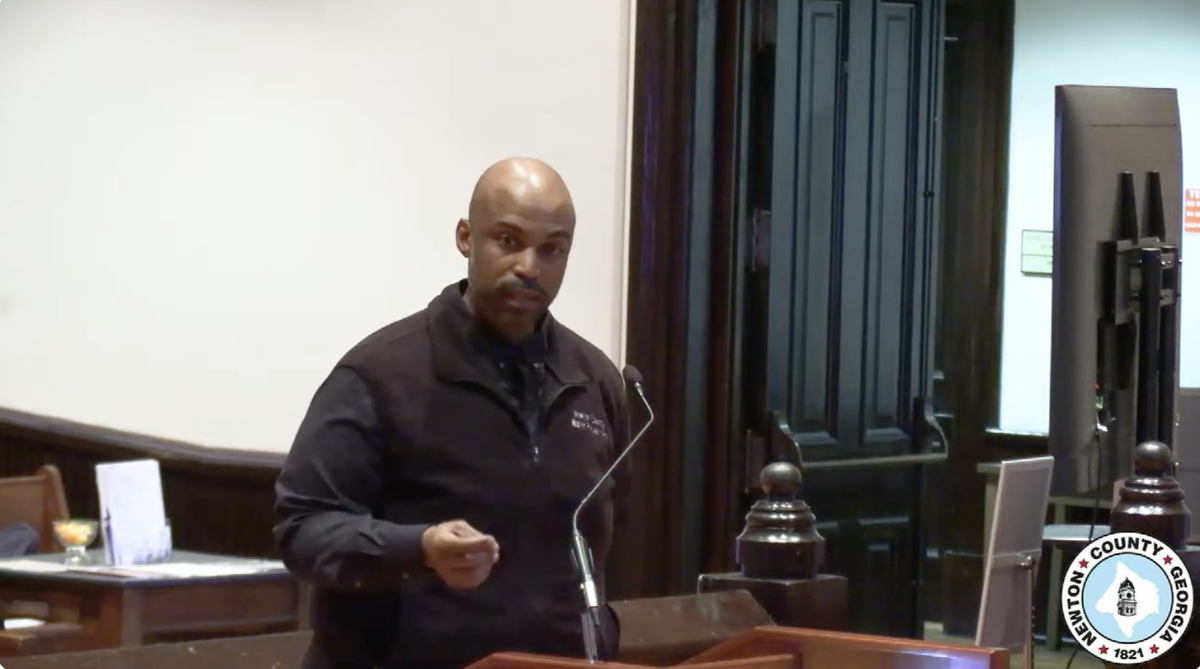
James Brown, Newton County water resources director, spoke to the board Tuesday night. Brown explained that the county has been testing for PFAS since around 2019 when it was mandated by the government that they do so.
“There are 29 constituents of the PSAT molecule,” Brown said. “We’ve tested for as many as the technology is available to test, and as of right now, all of those detectable ranges have reported back as ‘non-detect.’”
All 2024 PFAS tests from the county came back with ‘non-detect’ results, a welcome change from a few years prior when PFAS chemicals were detected at the Williams Street Water Treatment Facility in 2021.
Henderson reminded the board of the troublesome results in past years, and asked Brown how long the PFAS chemicals could have been in the water from Williams Street. However, Brown said there is no clear way to check as PFAS testing only goes back five or six years.
“That part we don’t know because it was mandatory from the government that we start testing for this particular compound, and then that's when we started notifying the commissioners, around that time, also EPD [Georgia’s Environmental Protection Division] and EPA.”
The Williams Street Water Treatment Facility is currently in the process of decommissioning, per a report from the county.
Brown updated the board on this process, citing a ‘No Significant Impact to the Environment’ report dated for Jan. 16 that is in regards to both the Cornish Creek Water Treatment Facility updates and Williams Street decommission. He said that this is essentially the second-to-last step in decommissioning Williams Street’s plant.
The Cornish Creek Plant expansion is also nearing completion, but is reportedly taking longer than originally anticipated. The updates will allow the plan to jump from processing 25 million gallons of water each day to 39.5 million gallons, making up for the Williams plant’s decommission.
Two agenda items related to the Cornish Creek facility upgrades were approved unanimously by the board.