What happens when you get a signer of the Declaration of Independence in a room with a signer of the United States Constitution? The University of Georgia, of course.
You may have been busy watching reruns of “Mr. Ed” last week and missed the news, but Jan. 27 marked the 241st anniversary of the founding of UGA in 1785, making it the oldest state-chartered university in the nation.
This fact rankles University of North Carolina supporters, who like to point out that although they didn’t receive a charter until four years later, UNC began enrolling students in 1795 and UGA didn’t get around to that until 1801, and therefore that makes them the oldest public university in the United States. Details. Details. We were first to be chartered – check the dates again – and obviously chose not to run out and let just anybody in to make a point. Quality before quantity.
The University of Georgia wasn’t founded by just anybody, either. Lyman Hall was a signer of the Declaration of Independence. Like Thomas Jefferson, who founded the University of Virginia; Benjamin Franklin, who founded the University of Pennsylvania; and Benjamin Rush, who founded Dickinson College; Hall, a graduate of Yale and now governor of Georgia, decided we ought to have our own university and talked the Legislature into it.
Hall got a fellow Yale alumnus, Abraham Baldwin, who signed the U.S. Constitution, to write the charter. You can’t say we didn’t start at the top. And if that wasn’t prestige enough, Baldwin also became the first president of the University of Georgia and, like Hall, got a county named for him.
Okay, now you’ve got your university. Where do you put the thing? John Milledge, a lawyer and legislator, bought 633 acres along the Oconee River in northeast Georgia with his own money and donated the land with the intention of placing the institution in a rural setting, away from “the corrupting influences, vices and temptations such as alcohol and gambling.” Give the guy credit. He meant well. He just never thought about nightlife in Athens, which definitely isn’t a rural setting and folks tailgate at football games six hours before kickoff.
By the way, Milledge didn’t get a county named for him but he get himself a city, Milledgeville, and an avenue in Athens – Milledge Avenue – where I must confess some corrupting influences are rumored to have occurred after he left. A lot of fraternity and sorority houses are located on Milledge Avenue. My fraternity was located on Milledge Avenue. That is where our pet, a dachshund named D-----, had a predilection for lapping bourbon from a saucer. I doubt Mr. Milledge would have approved of that. But Dammit loved it.
I’m not sure of the vision that Lyman Hall and Abraham Baldwin had for their “college or seminary of learning.” The first graduating class in 1804 consisted of only ten students. Clearly, the vision didn’t include football. Lucky for them that football hadn’t been invented yet. They didn’t need the hassle of fair-weather fans, portal transfers, NIL money or players roaring around town in souped-up Dodge Chargers, which also had not been invented yet, either.
The first permanent university building, a three-story brick structure, was completed in 1806 and named Franklin College in honor of Benjamin Franklin, who signed both the Declaration of Independence and the U.S Constitution. There is no evidence that Franklin reciprocated and named a building at the University of Pennsylvania for either Baldwin or Hall. Tacky.
Franklin College rocked along until 1859 when a law school was created, assuring the world we would always have more lawyers than we needed.
To combat that frightening prospect, the University of Georgia created a school of journalism in 1915, later named the Henry W. Grady College of Journalism and Mass Communications that has attracted the very brightest and very best – future editors and publishers, broadcasters, writers, Hollywood producers, advertising executives and, yes, even one modest yet much-beloved columnist who bears a striking resemblance to a young Brad Pitt.
That three-story building with ten students and one faculty member in 1801 is now an institution with some 40,000 students, 18 schools and colleges, an academic staff of over 3,000, 28 Rhodes Scholars, 4 national football championships and is consistently ranked one of the top 20 public universities in the country. Lyman Hall and Abraham Baldwin’s work was not in vain.
Thank you, gentlemen, for your good works and Happy Birthday to my beloved alma mater. Woof! Woof!
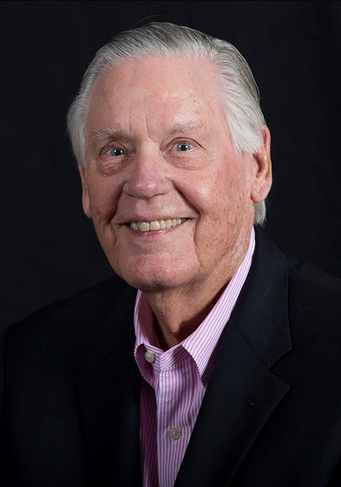
You can reach Dick Yarbrough at dick@dickyarbrough.com or at P.O. Box 725373, Atlanta, Georgia 31139.