To read the full letter, click here.
NEWTON COUNTY – A letter from Newton County District Attorney Randy McGinley has confirmed that, at this time, no one is being prosecuted in the fatal October shooting at the Magnolia Heights apartment complex.
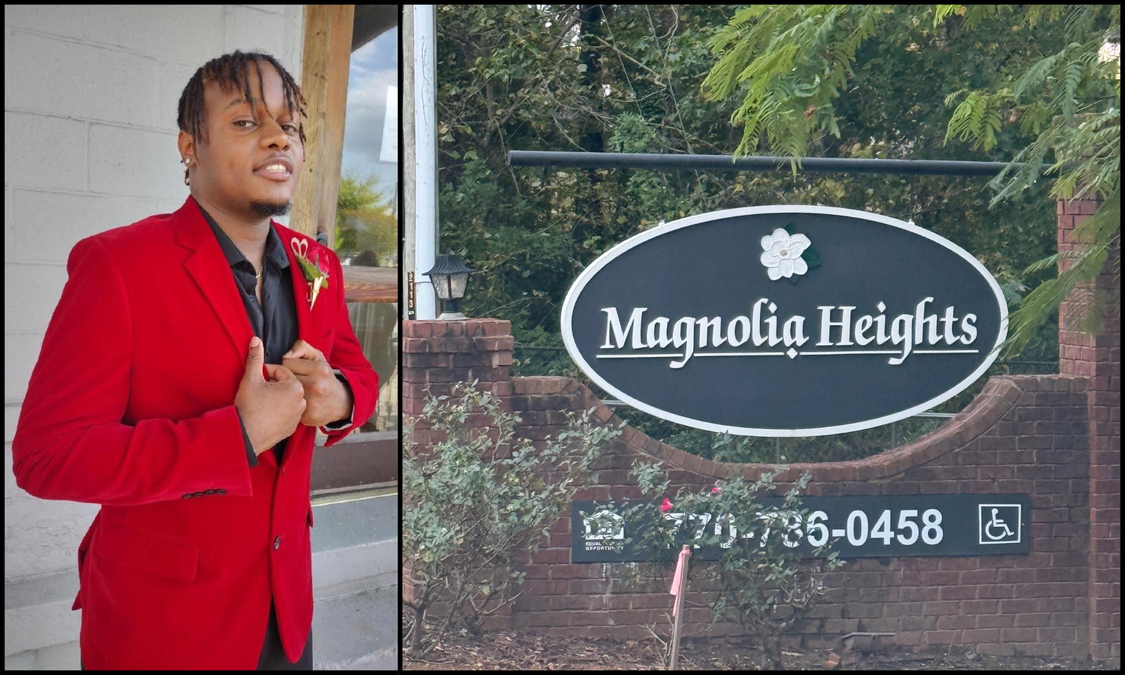
Amaro Heron, 21, was killed on Oct. 29 after being shot in his apartment at Magnolia Heights. Heron, whose identity was previously unreleased, was a 2022 graduate of Alcovy High School.
In his 10-page explanation shared on Dec. 29, McGinley shared how the investigation led the office to determine that the parties involved would not face criminal charges for actions that caused Heron’s death.
Per the explanation, as well as previous reporting by The Covington News, Heron was killed after forcing entry into an apartment that he was co-leasing with Lashay Taylor. He was shot and killed by Camron Hayes, a guest of Taylor’s, with both Hayes and Taylor saying that they did not know who had entered the unit.
“This comes down to whether there is evidence to disprove that Hayes subjectively and reasonably objectively believed an unknown intruder had broken into the apartment in which he was an overnight guest,” McGinley wrote. “Ultimately, the investigation did not provide such evidence.
“Instead, the evidence shows that he did believe an unknown intruder had broken into the apartment. Further, the evidence shows that this belief was reasonable. For these reasons, and those explained above, based on the evidence provided to me, there is not sufficient evidence to proceed with prosecution of Hayes for his actions that led to the death of Amaro Heron.”
Heron’s father shared his disappointment in the district attorney’s decision and how the Georgia law that authorizes a person to use deadly force upon forced entry applies to this situation.
“I don’t find that fair in this situation due to the fact that my son was banging on the door first, and I’m pretty sure he was saying things and letting people know who he was at the door,” Heron’s father, Andrew, told The News. “And they just kind of like disregarded that and took it as ‘well, it’s self-defense.’ So it did not sit with me right.”
The letter outlines the sequence of events that investigators have determined led up to Heron’s death.
Heron reportedly arrived at the apartment complex around 7:30 a.m. that morning. Though Heron remained on the lease, McGinley’s letter states that he was not actively residing at the apartment at that time.
Upon arrival, Heron forcibly entered the unit, as he did not have a key on him at the time, per the Covington Police Department. The letter states that officers observed a bent door handle and a broken door frame, supporting this narrative.
Taylor told investigators that she and Hayes were sleeping when they heard the sounds of forced entry and saw a figure moving towards the bedroom.
“Taylor took steps to try to determine who it was, but her phone showed that both Heron and another friend that stayed in the apartment at times were not at the apartment,” McGinley wrote. “...The fact that this person was actually Heron, who was on the lease of the apartment, was not known (subjectively and objectively) to Hayes or Taylor until after Hayes had fired his handgun.”
The letter specifies that Taylor checked Heron’s location using my “Find My” app on iPhone, which showed Heron’s location at his mother’s residence. It is not immediately clear why Heron’s phone location was not up to date, as the letter offers no explanation.
Hayes fired three shots at Heron before calling 911, reporting that a person had broken into the apartment and that he had shot them.
“[Hayes stated that he] did not know it was someone that Taylor knew until she turned on the lights and recognized the person as Heron,” McGinley wrote. “He told investigators that he did not know another man was living or had lived in the apartment.”
McGinley noted that crime scene evidence, as well as a search of both Hayes's and Taylor’s cell phones, supported the statements.
“Investigators observed the text message from Heron to Taylor on October 28 and confirmed that there was no response from Taylor,” McGinley wrote. “Investigators did find that Heron had called Taylor twice at approximately 6:55 am on October 29. However, Taylor’s phone was on ‘do not disturb’ and she was not aware of those calls. Investigator’s [sic] observed that Heron’s phone was still showing at his mother’s residence on Taylor’s ‘find my’ phone app.”
In his letter, McGinley outlines how he established whether or not it would be appropriate to prosecute Hayes for shooting Heron. He also acknowledged the complexity of the situation.
“Whether Hayes could have acted in a different manner, including doing something different that would have led to Heron not being shot, is legally irrelevant,” McGinley wrote. “Could different decisions, by all parties involved, have led to a less tragic result? Rarely could this question be answered negatively. In hindsight, all those involved could have acted differently.
“But the question for me as District Attorney is whether there is sufficient evidence, based on the investigation provided to me, to prosecute Hayes for a crime. The law and the evidence are what my conclusion is based on.”
Ultimately, McGinley concluded that Hayes’s actions that caused Heron’s death—which he called a tragedy—were not eligible to be prosecuted as criminal action.