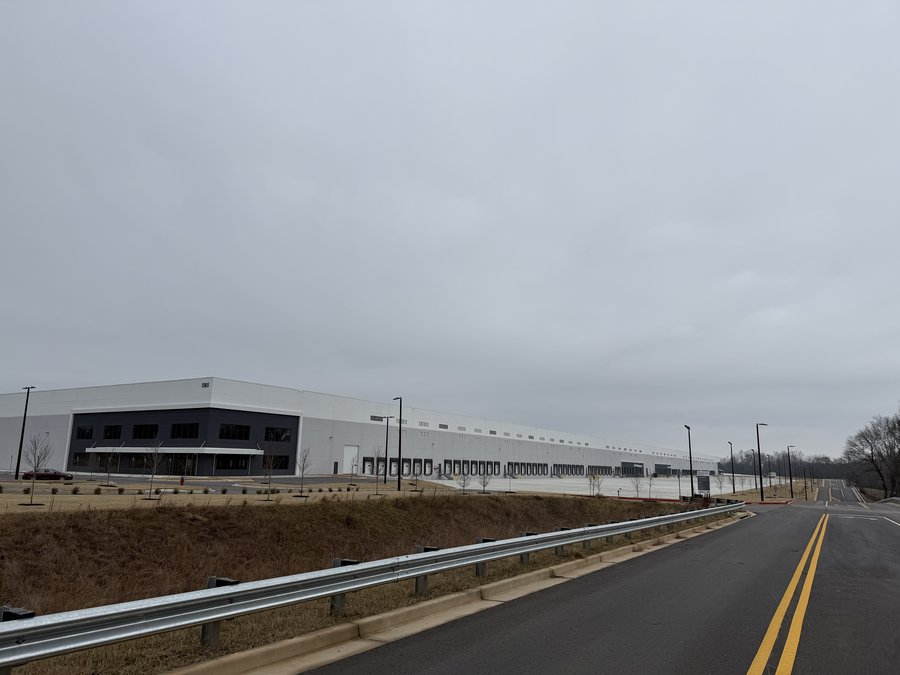
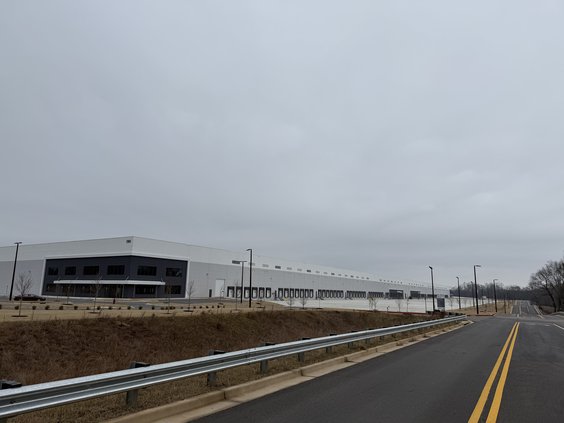
SOCIAL CIRCLE, Ga. - The City of Social Circle has reportedly met with representatives from the Department of Homeland Security (DHS) to discuss the future Immigration and Customs Enforcement (ICE) detention center that is set to come to the city.
According to a Wednesday evening Facebook post, construction contracts for transforming a Social Circle warehouse into an ICE detention center “is expected to be awarded within the next week." It was noted, however, that the ongoing federal government shutdown could delay that timeline.
Once a contract is awarded, according to the city’s online posting, “the estimated construction timeline is approximately 60–75 days, which would place the potential start of intake between mid-May and June.”
According to other information provided in the city’s post, the detention center site - which the federal government purchased from PNK Group for $128.5 million - “… is expected to house anywhere from 7,500 to 10,000 detainees … and is projected to employ approximately 2,000 to 2,500 staff members.”
The detention center will, the city states in its post, “… be constructed using a modular design so that capacity can be scaled up or down as needed.”
Also according to the city, documentation provided to it “… indicates that the facility will include, but not be limited to, holding areas, gyms and recreational spaces both indoors and outdoors, court facilities, intake areas, cafeterias, laundry facilities, on-site health services, and a gun range.”
This latest bit of information comes one day after Social Circle City Manager Eric Taylor told The Walton Tribune following Tuesday’s city council meeting that he had spoken recently with an official placed “pretty high” in the DHS, a conversation he said Tuesday appeared to be little more than a “check the box” exercise by the DHS official. Taylor also said in a brief interview at the city council’s Tuesday meeting that his “general impression” was that the detention center is being handled “in a very rushed way.”
Wednesday’s post by the city continues that concern. In it, the city counters documents provided to it that “stated that the facility will have ‘no adverse effect on the community and surrounding properties.’”
In response, the city notes that it “… contends that the information provided is insufficient in fully answering our questions and does not adequately support the conclusion that the surrounding area would not be impacted.”
The city’s detailed critique of the detention center plan notes that its concerns regarding water and sewer infrastructure “have not been addressed to our satisfaction. We continue to have more questions than answers.”
Specifically, city officials are concerned that a DHS wastewater analysis refers to a treatment facility in Newton County providing some available treatment capacity. However, as the city notes, the referenced treatment facility “… is not owned by the City of Social Circle, is not located within the city limits, is in a different county, and does not connect to the city’s utility system or this building [the warehouse facility that ICE plans to turn into a detention center].”
In addition, the city notes that other supposedly available treatment capacity referenced in the DHS analysis “… was attributed to a sewer treatment plant the City is planning to build. Construction on this plant has not yet begun and will take a year to eighteen months to build, meaning it will not be operational by the time DHS intends to begin intake.”
The city goes on to point out that while DHS indicates the detention center would have a sewage demand of more than 1 million gallons daily, the city’s wastewater system - which is already operating at capacity - is processing just 660,000 gallons per day.
The city also comments on a DHS reference to the potential for on-site wastewater treatment at the detention center, noting that “… what remains notably unclear is where the resulting liquid effluent would actually be discharged. Where exactly is this effluent intended to go, given that the City’s existing wastewater treatment plant is already operating at capacity and is strained to manage current demand, let alone accept additional waste from a facility of this scale?”
Also in the post, the city is critical of a DHS analysis under which the detention center’s water demands would be met by “a cistern-based approach in which tanks would be filled from local municipal systems during off-peak hours.”
However, the city notes, “Regardless of the time of day, the City’s infrastructure cannot accommodate this level of demand — a point City officials have stated repeatedly. While the (cistern) proposal is certainly creative, it does not resolve the fundamental issue: the total additional water demand required for a facility of this scale simply exceeds what the City’s system is capable of providing.”
Such demand could only be met, the city notes, by substantial infrastructure expansion.
“When City officials asked whether DHS would provide financial assistance for such upgrades,” the city’s Wednesday post reads, “representatives did not have an immediate answer and instead suggested hypothetical alternatives, such as drilling a well on the property or transporting water from off-site sources.
“To be clear, the City has repeatedly communicated that it does not have the capacity or resources to accommodate this demand, and no proposal presented to date has demonstrated otherwise.”
Also in the Wednesday post, the city writes that DHS “… has stated that an economic impact study has been conducted in connection with this proposed facility; however, city officials have not received a copy of that study and are awaiting the opportunity to review the analysis.”
As part of the Wednesday post, the city has provided links to the federal government’s infrastructure analysis, available here. There is also a three-page look at an “ICE Detention Reengineering Initiative” at this link.