COVINGTON, Ga.— The city of Covington has passed a budget for the 2026 fiscal year.
Randy Smith, the city’s finance director, told the council that the final numbers following multiple work sessions have the city’s total revenues at $216,980,117 and total expenditures at $216,673,445.
“This budget includes a contingency of $306,662 entirely within the general fund,” Smith said.
This is lower than the city’s budget from the previous year, which estimated $222,149,682 in revenues and allotted $221,594,417 for expenditures—a nearly $5 million decrease.
The proposed budget shows increases and decreases in general fund expenditures across 21 city departments. The most notable included:
- Elected Officials: 52% increase, amounting to $627,002
- Utility Billing/Meter Reading: 25.31% decrease, amounting to $299,012
- Human Resources: 18.33% increase, amounting to $194,470
- Telecommunications: 49.12% increase, amounting to $147,114
Most of the increase to the Elected Officials account can be attributed to a line item designed “transfer out.” None of the officials' salaries are poised to change.
The Covington News reached out to Audra Gutierrez, city clerk, for more information about line item “transfer out.” Gutierrez shared the following information, attributing it to the city’s finance department:
That transfer represents use of impact fees that were collected in fiscal year 2024 and will be spent in fiscal year 2025 for a downpayment on a new fire apparatus and turning targets for the police shooting range. The impact fees are housed in the general fund, but the expenditures are housed in the capital projects fund; therefore, we need a transfer out of the general fund and into the capital projects fund.
The increase to Human Resources’ budget appears to be largely split between a few key line items. Of the additional $194,470 that the department is set to receive this fiscal year, $125,500 is attributed to contracted services. Last year, that item was budgeted for $25,000; this year it received $150,500.
In addition to this, other sizable increases were to legal fees, which went from $9,000 to $25,000. Regular employee wages also increased by $14,696. The remainder of the increases are distributed in smaller increments to other expenditures, such as food and equipment.
Alongside Utility Billing/Meter Reading, only two other departments saw a budget decrease when compared to the previous year. Both the City Manager’s Office and Parks/Cemeteries were allotted less money, but both decreases were less than 4%.
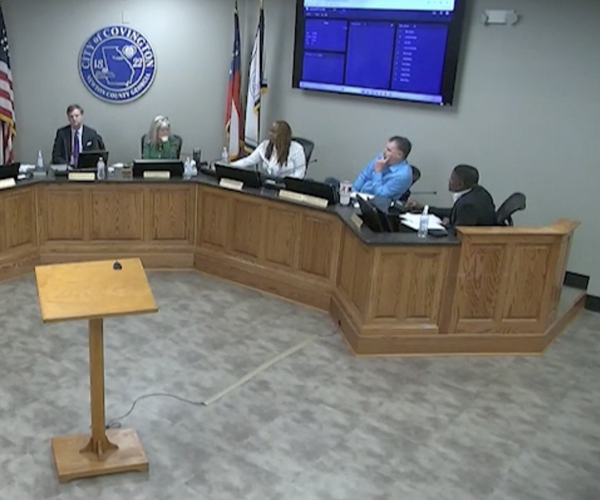
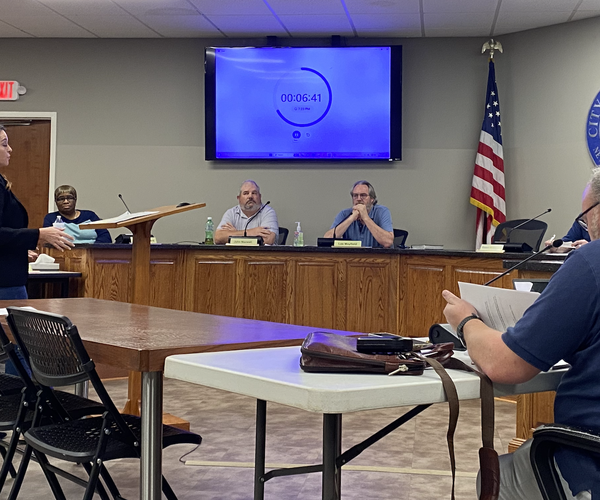
But the budget was not voted on without deliberation at Monday’s meeting. After Smith presented the total revenues and expenditures, Councilman Anthony Henderson requested that the finance director speak on the millage rate.
With the previous year’s city millage rate being 5.756 mills, the proposed millage rate for FY26 —if approved—would fall at 6.406 mills. At the request of Councilwoman Susie Keck, Smith added that 0.65 equates to $58.50 on a house with a market value of $225,000.
“To balance the budget, we had that we needed to collect $7,998,761 in property taxes,” Smith said. “So when we got back the digest from the county, we used that to calculate a 0.65 millage rate increase that would allow us to collect the amount of money to balance the budget that we’re voting on.”
Henderson petitioned the council to pass a budget with no increase in millage rate, saying he will not support a budget that includes a millage rate increase. Keck argued that the council had gone over every line item in the budget and that no more cuts could be made.
But Henderson’s primary solution for the council was one that the public cannot be privy to.
Henderson repeatedly referenced something that may be coming to the city, without directly mentioning what the project may be. The council appeared aware of Henderson’s allusions, despite the public’s lack of insight.
“Obviously we have things in the pipeline that could balance this out without increasing the millage rate, at least right now,” Henderson said. “I mean, we can’t talk about it, but it’s possibilities.”
As of now, there is no insight into the specifics of what Henderson could be referencing. The council has met multiple times in recent months behind closed doors to discuss land acquisition. The council members are likely to remain tight-lipped about the undertaking until all deals are complete in order to ensure nothing goes awry.
Keck, seeming to understand what Henderson was referring to, consented that Henderson’s point was a possibility. But the councilwoman stressed that the millage increase was needed since nothing was confirmed.
“Yeah, possibly, but we have to pass the millage rate to meet the current budget,” Keck said. “But we don’t have to spend all the money, and that could affect next year. But we have to increase police. We have to increase fire. And that’s what that millage rate increase is a result of.”
Mayor Fleeta Baggett weighed in, saying that money could be saved if the city chose to cut back certain projects.
“I mean, you could save over a million dollars if you don’t want to put the sidewalk down Flat Shoals [Road],” Baggett said.
This statement brought on the ire of Councilwoman Charika Davis, who said that the sidewalk project on Flat Shoals Road has nothing to do with this and that the west side of the city disproportionately feels the effects of cuts.
“Every time something comes up with cuts and spending money, you want to go to the west,” Davis said. “There’s plenty of things that you could cut on the east besides taking the sidewalks off Flat Shoals [Road].”
The mayor stated that her mention of the sidewalk project on Flat Shoals Road was just an example and asked if Davis could offer a different project as an example.
But tensions grew as Davis fired back.
“I didn’t bring it up, and I don’t have to give you an example,” Davis said. “I’m just telling you, keep the west’s name out your mouth if you’re talking about taking cuts out. That’s all I’m saying, because you always do that.”
Ultimately, the council voted to pass the budget, with Henderson and Davis voting in opposition.
“We can cut the money all the way down the line as stuff comes up; we can do that,” Baggett said. “But we have to set the millage rate to meet the budget as it looks on paper now…You can’t count on something we don’t have. We don’t know what might happen.”
The city will still host three public hearings before voting on any changes to the millage rate. The hearings are scheduled for July 28 at 10 a.m. and 6 p.m., and Aug. 4 at 10 a.m. in the Council Room at 2116 Stallings St.